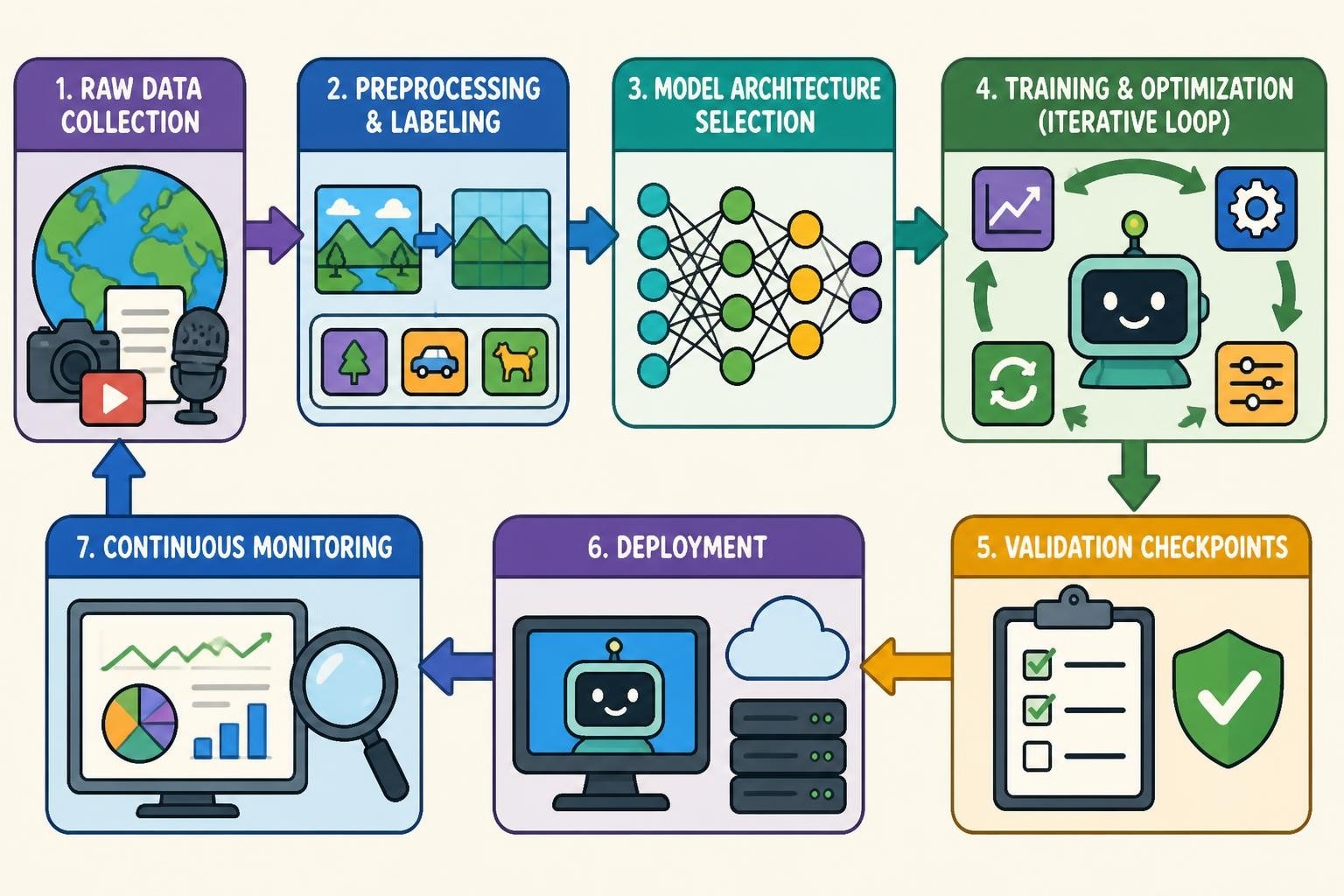
The artificial intelligence landscape has evolved dramatically, and professionals seeking to advance their careers now face a critical question: what separates a truly advanced artificial intelligence course from intermediate offerings? In 2026, the gap between basic machine learning tutorials and production-ready AI expertise has never been wider. An advanced artificial intelligence course must go beyond teaching frameworks and libraries, instead focusing on architectural decisions, mathematical foundations, and the engineering practices that separate hobbyists from industry practitioners. This guide explores the essential components, learning outcomes, and strategic considerations that define world-class advanced AI education.
Core Curriculum Components of Advanced AI Training
An advanced artificial intelligence course should build upon solid machine learning foundations while diving deep into specialized domains that reflect current industry demands. The curriculum architecture matters as much as the individual topics covered.
Mathematical Foundations and Theory
Advanced learners require rigorous mathematical grounding that goes beyond surface-level implementations. The Mathematics of Neural Networks lecture notes demonstrate how theoretical foundations inform practical choices in model architecture and optimization.
Essential mathematical topics include:
- Differential geometry and manifold learning
- Information theory and Bayesian inference
- Convex optimization and variational methods
- Stochastic processes and Markov decision processes
These aren't academic exercises. Understanding why certain activation functions preserve gradients better than others, or how information bottlenecks affect network expressivity, directly impacts your ability to debug complex models and design novel architectures.
| Mathematical Area | Practical Application | Industry Relevance |
|---|---|---|
| Linear Algebra | Attention mechanisms, embeddings | Transformers, recommendation systems |
| Probability Theory | Uncertainty quantification, generative models | Risk assessment, content generation |
| Calculus & Optimization | Gradient-based learning, adaptive methods | All neural network training |
| Graph Theory | Knowledge graphs, social networks | Enterprise data integration |
Deep Learning Architectures and Implementation
The MIT Introduction to Deep Learning course provides an excellent template for structuring advanced architectural content. Modern courses must cover not just what architectures exist, but when and why to deploy them.
Transformer architectures have become ubiquitous, but an advanced artificial intelligence course should examine their variants and limitations. Students need hands-on experience implementing attention mechanisms from scratch, understanding positional encodings, and recognizing when simpler architectures outperform complex ones.
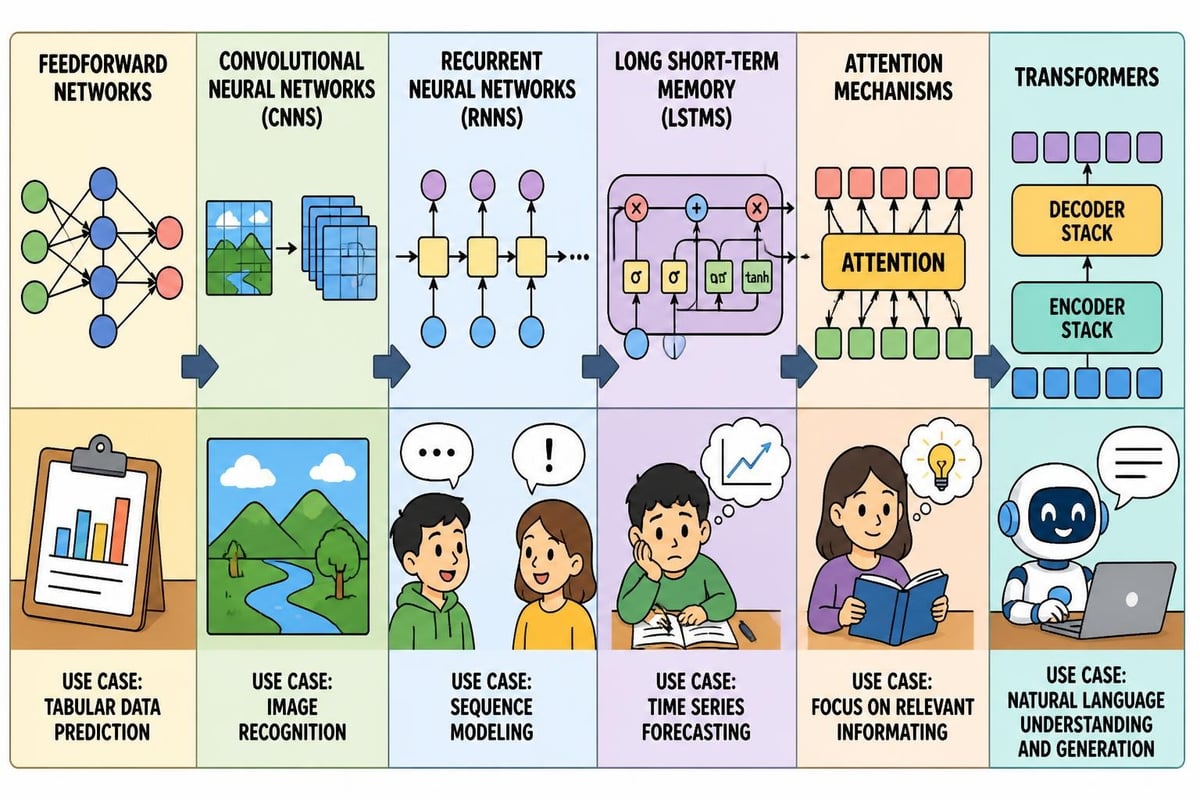
Architecture deep-dives should include:
- Vision transformers and their efficiency variants
- State space models and long-sequence processing
- Diffusion models for generative tasks
- Graph neural networks for relational data
- Mixture-of-experts and sparse architectures
Contemporary best AI courses emphasize production readiness alongside theoretical understanding. This means covering model quantization, pruning, and distillation techniques that make deployment feasible.
Natural Language Processing and Large Language Models
Natural language processing has undergone a renaissance with large language models, making it essential content for any advanced artificial intelligence course in 2026. The comprehensive Stanford CS224N syllabus offers a blueprint for structuring this critical domain.
From Word Embeddings to Contextual Representations
Advanced NLP instruction should trace the evolution from static word vectors to dynamic, context-dependent representations. Students benefit from implementing each generation of embedding techniques to understand the trade-offs.
The journey from Word2Vec to BERT to GPT architectures reveals fundamental insights about language modeling. An effective curriculum includes:
- Building word embeddings from scratch using skip-gram and CBOW
- Implementing recurrent architectures for sequence modeling
- Coding attention mechanisms and self-attention from first principles
- Fine-tuning pre-trained language models for downstream tasks
- Evaluating model performance across diverse linguistic phenomena
Prompt Engineering and Model Alignment
The Google Research team's work on instruction tuning and reinforcement learning from human feedback demonstrates how modern NLP extends beyond traditional supervised learning.
Advanced practitioners need skills in:
- Designing effective prompting strategies for different tasks
- Understanding few-shot and zero-shot learning dynamics
- Implementing retrieval-augmented generation systems
- Evaluating alignment between model outputs and human preferences
For professionals interested in specialized applications, exploring AI in digital marketing courses or AI trading course content can provide domain-specific NLP applications.
Computer Vision and Multimodal Learning
Vision remains one of AI's most commercially valuable domains, with applications spanning autonomous systems, medical imaging, and augmented reality. An advanced artificial intelligence course must cover state-of-the-art vision techniques while addressing their integration with other modalities.
Advanced Vision Architectures
Modern computer vision extends far beyond convolutional neural networks. The curriculum should examine:
- Vision transformers and their hierarchical variants
- Self-supervised learning methods (contrastive learning, masked autoencoders)
- Object detection and segmentation with recent architectures
- 3D vision and neural radiance fields
- Video understanding and temporal modeling
Practical implementations matter. Students should build complete pipelines from data augmentation through model training to deployment, understanding how choices at each stage affect final performance.
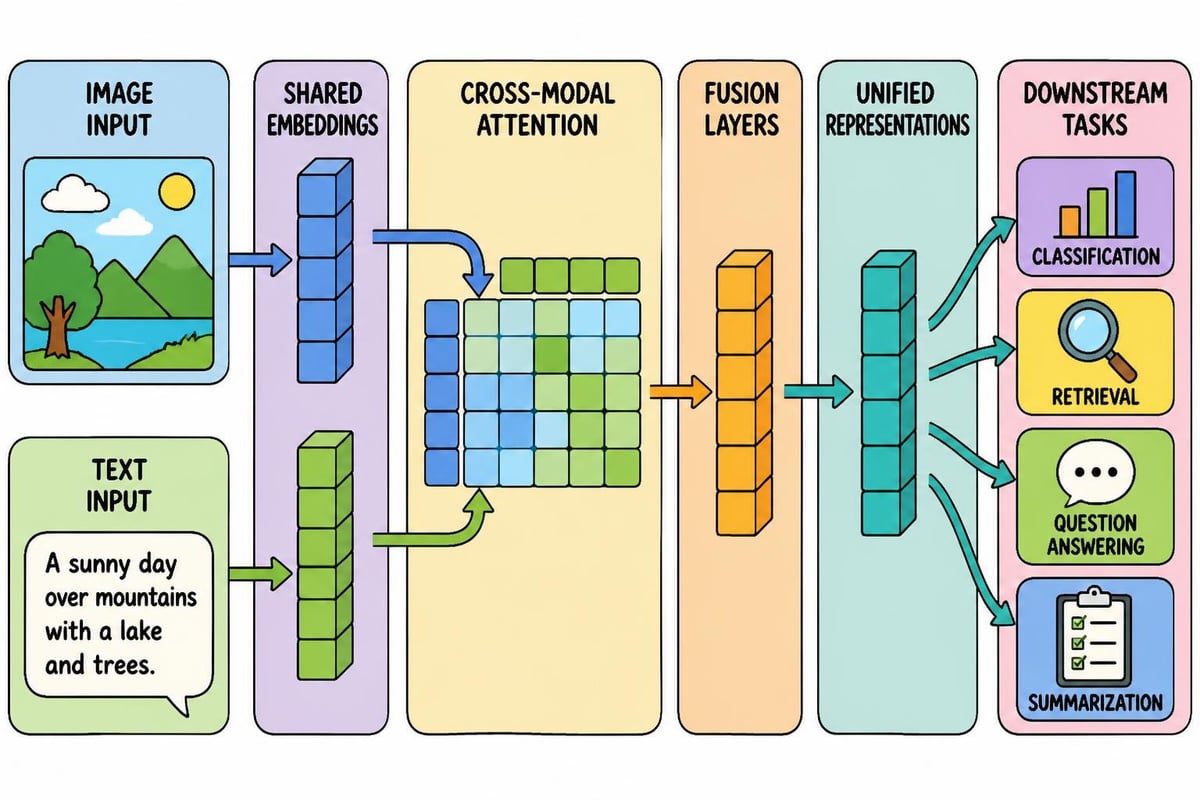
Multimodal Integration
The convergence of vision and language represents one of AI's most exciting frontiers. Advanced courses should cover:
| Multimodal Task | Key Techniques | Real-World Applications |
|---|---|---|
| Image Captioning | Cross-attention, encoder-decoder architectures | Accessibility, content moderation |
| Visual Question Answering | Reasoning modules, memory networks | Education, customer support |
| Text-to-Image Generation | Diffusion models, CLIP embeddings | Creative tools, design automation |
| Video-Language Understanding | Temporal transformers, hierarchical attention | Content search, automated editing |
Reinforcement Learning and Decision Making
Reinforcement learning represents the frontier where AI systems learn through interaction rather than passive observation. An advanced artificial intelligence course must provide both theoretical grounding and practical experience with RL algorithms.
Core RL Algorithms and Implementations
The NeurIPS 2024 tutorials showcase cutting-edge developments in reinforcement learning, from theoretical foundations to practical applications in robotics and game playing.
Essential RL coverage includes:
- Markov decision processes and dynamic programming
- Policy gradient methods (REINFORCE, PPO, A3C)
- Value-based methods (DQN, Rainbow, distributional RL)
- Actor-critic architectures and their variants
- Model-based RL and world models
- Multi-agent reinforcement learning
Students should implement classic environments before tackling custom scenarios. Understanding why certain algorithms fail in particular settings builds the intuition needed for real-world applications.
Advanced Topics in Decision Making
Modern RL extends into areas like offline reinforcement learning, meta-learning, and safe exploration. An advanced artificial intelligence course should address:
- Inverse reinforcement learning and imitation learning
- Hierarchical reinforcement learning for complex tasks
- Transfer learning across different environments
- Sample efficiency and few-shot adaptation
- Safety constraints and risk-sensitive learning
Those exploring AI applications in specific domains might find value in AI in drug discovery course content, where RL plays an increasingly important role in molecular design.
Production Engineering and MLOps
Academic knowledge means little without the engineering skills to deploy models reliably at scale. This represents perhaps the largest gap between intermediate and advanced AI education.
Infrastructure and Acceleration
The NVIDIA Deep Learning Institute catalog provides comprehensive coverage of GPU-accelerated computing, a critical skill for modern AI practitioners. Understanding GPU requirements for AI training directly impacts project feasibility and cost.
Infrastructure topics should include:
- Distributed training across multiple GPUs and nodes
- Mixed-precision training and automatic mixed precision
- Model parallelism and pipeline parallelism
- Gradient accumulation and memory optimization
- Efficient data loading and preprocessing pipelines
Deployment and Monitoring
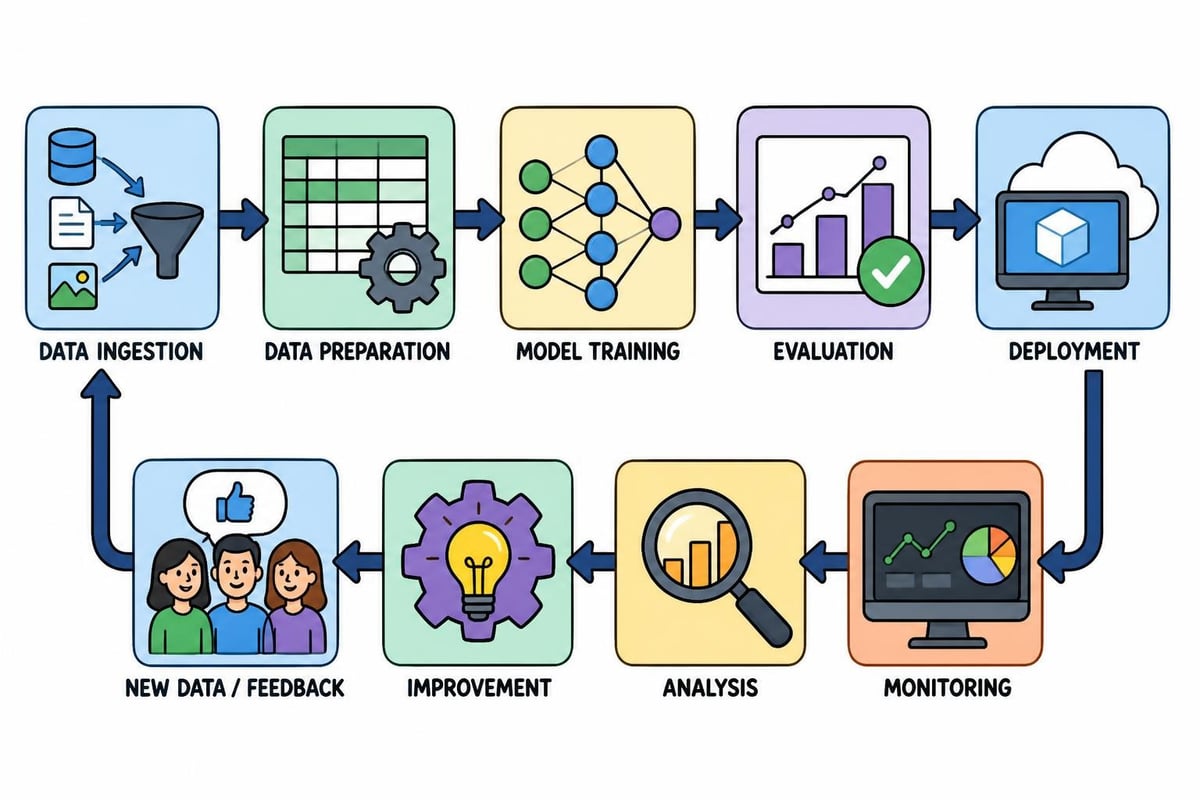
Moving from research code to production systems requires entirely different skills. Advanced courses must cover:
- Model serving frameworks and API design
- Batch vs. real-time inference trade-offs
- A/B testing and experimentation frameworks
- Model monitoring and drift detection
- Continuous training and model updates
| Deployment Stage | Key Considerations | Common Pitfalls |
|---|---|---|
| Preprocessing | Data validation, feature store design | Schema drift, missing value handling |
| Inference | Latency requirements, batching strategies | Memory leaks, inefficient serialization |
| Monitoring | Metric selection, alert thresholds | Alert fatigue, incomplete logging |
| Updating | Versioning, rollback procedures | Breaking changes, dependency conflicts |
Hands-On Projects and Capstone Experiences
Theory and isolated exercises provide foundation, but an advanced artificial intelligence course proves its value through comprehensive projects that mirror real-world complexity.
Project Design Principles
Effective capstone projects should:
- Address ambiguous problems without clear-cut solutions
- Require integration of multiple techniques and domains
- Include data collection, cleaning, and versioning
- Demand thoughtful evaluation beyond standard metrics
- Culminate in deployable artifacts
Example project categories include:
- Building a domain-specific question-answering system with retrieval augmentation
- Developing a multi-agent simulation for economic or social modeling
- Creating a content moderation pipeline with fairness constraints
- Implementing a recommendation system with cold-start handling
- Designing an automated scientific discovery tool for a specific field
Students should present their work, defending architectural choices and discussing limitations. This mirrors industry practices where technical communication matters as much as implementation skills.
Industry Collaboration and Real Datasets
The best advanced courses incorporate industry partnerships that provide access to realistic datasets and problem formulations. Working with messy, imbalanced, privacy-sensitive data teaches lessons that clean academic benchmarks never can.
Projects might explore challenges similar to those addressed in no-code AI course offerings, but with full implementation control and deeper technical engagement.
Ethical AI and Responsible Development
As AI systems increasingly impact society, advanced practitioners must understand their ethical obligations and the techniques for building responsible systems.
Fairness, Accountability, and Transparency
An advanced artificial intelligence course should examine:
- Defining and measuring fairness across different contexts
- Bias detection and mitigation strategies
- Explainability methods (LIME, SHAP, attention visualization)
- Privacy-preserving techniques (differential privacy, federated learning)
- Regulatory compliance and documentation requirements
Practical exercises might include:
- Auditing existing models for demographic bias
- Implementing fairness constraints during training
- Creating interpretability dashboards for stakeholder communication
- Designing privacy-preserving data collection protocols
Environmental Impact and Efficiency
The carbon footprint of training large models has become a legitimate concern. Advanced courses should address:
- Measuring and reporting energy consumption
- Efficiency techniques that reduce environmental impact
- Trade-offs between model size and performance
- Sustainable AI practices for long-term development
Certification and Career Outcomes
Completing an advanced artificial intelligence course represents a significant investment of time and resources. Understanding the credential's value in the marketplace matters.
Industry-Recognized Certifications
Professional certifications from major technology companies carry weight with employers. Platforms offering NVIDIA AI certification or IBM AI certification programs provide structured paths that employers recognize.
An advanced artificial intelligence course should prepare learners for these certifications while providing deeper understanding than certification-focused bootcamps.
Career Trajectories and Specializations
Advanced AI skills open multiple career paths:
| Role | Primary Skills | Typical Projects |
|---|---|---|
| Research Scientist | Novel algorithm development, publication | Pushing state-of-the-art on benchmarks |
| ML Engineer | Production deployment, scalability | Building reliable inference systems |
| AI Architect | System design, technology selection | Designing enterprise AI platforms |
| Domain Specialist | Vertical expertise, problem formulation | Applying AI to healthcare, finance, etc. |
Those interested in specific applications might explore AI-related courses that combine technical skills with domain knowledge.
Choosing the Right Advanced AI Program
Not all advanced courses deliver equal value. Evaluating programs requires looking beyond marketing to examine curriculum depth, instructor expertise, and student outcomes.
Evaluation Criteria
Key factors to assess:
- Instructor backgrounds and research contributions
- Project complexity and industry relevance
- Access to computational resources
- Community and networking opportunities
- Post-completion support and alumni engagement
The DeepLearning.AI courses set standards for accessible yet rigorous online education, but diverse learning paths exist.
Learning Format Considerations
Different formats suit different learners:
- Self-paced online courses offer flexibility but require discipline
- Structured bootcamps provide intensity and cohort support
- University programs deliver credentials and networking
- Corporate training ensures team alignment and shared vocabulary
Advanced artificial intelligence course selection depends on career stage, available time, and learning style preferences. Professionals balancing work commitments might prioritize platforms with flexible scheduling, while those making career transitions might prefer intensive bootcamp formats.
Cost-Benefit Analysis
Tuition for advanced AI programs ranges from free MOOCs to $50,000+ graduate programs. Consider:
- Opportunity cost of time invested
- Credential value in target job market
- Access to instructors and mentorship
- Quality of computational resources provided
- Career services and placement support
The right choice balances immediate financial capacity against long-term career impact.
Staying Current in a Rapidly Evolving Field
An advanced artificial intelligence course provides foundational expertise, but the field evolves constantly. Graduates must cultivate habits for continuous learning.
Research and Publication Tracking
Following cutting-edge developments requires:
- Regular reading of preprint servers (arXiv, bioRxiv)
- Attending virtual conferences and workshops
- Participating in reading groups and paper discussions
- Implementing recent papers to understand their contributions
Conference tutorials, like those at NeurIPS and ICML, distill complex advances into accessible formats.
Community Engagement
The AI community shares knowledge generously through:
- Open-source contributions to major frameworks
- Blog posts and technical tutorials
- Social media discussions and debates
- Online forums and specialized communities
Active participation accelerates learning. Contributing to projects, answering questions, and sharing implementations builds both skills and professional networks.
Experimental Practice
Hands-on experimentation cements understanding. Regular practice might include:
- Reproducing influential paper results
- Applying new techniques to personal projects
- Participating in competitions and challenges
- Building and sharing educational resources
- Mentoring others to reinforce knowledge
The most successful AI practitioners balance consumption of new information with active creation and teaching.
Integration with Broader Technical Skills
An advanced artificial intelligence course exists within a broader ecosystem of technical competencies. Complementary skills amplify AI expertise.
Software Engineering Fundamentals
Production AI requires solid software engineering:
- Version control and collaborative development
- Testing strategies for ML systems
- Code review and documentation practices
- Performance profiling and optimization
- Containerization and orchestration
Data Engineering Capabilities
AI models are only as good as their data. Essential data skills include:
- Designing scalable data pipelines
- Implementing ETL processes
- Working with diverse data stores (SQL, NoSQL, vector databases)
- Ensuring data quality and validation
- Managing data governance and lineage
Cloud and DevOps Knowledge
Modern AI development happens in cloud environments. Practitioners need familiarity with:
- Major cloud platforms (AWS, Azure, GCP)
- Infrastructure as code (Terraform, CloudFormation)
- CI/CD pipelines for ML workflows
- Cost optimization and resource management
- Security and compliance requirements
These complementary skills transform AI knowledge from academic understanding into production capability.
Selecting an advanced artificial intelligence course requires careful evaluation of curriculum depth, hands-on opportunities, and alignment with your career goals. The right program combines rigorous mathematical foundations with practical engineering skills, preparing you to tackle real-world challenges in 2026 and beyond. MammothClub offers 3,000+ AI and tech courses, interactive bootcamps, and corporate certification programs designed to help professionals and teams master advanced AI concepts through measurable, results-driven learning experiences that keep pace with industry evolution.